
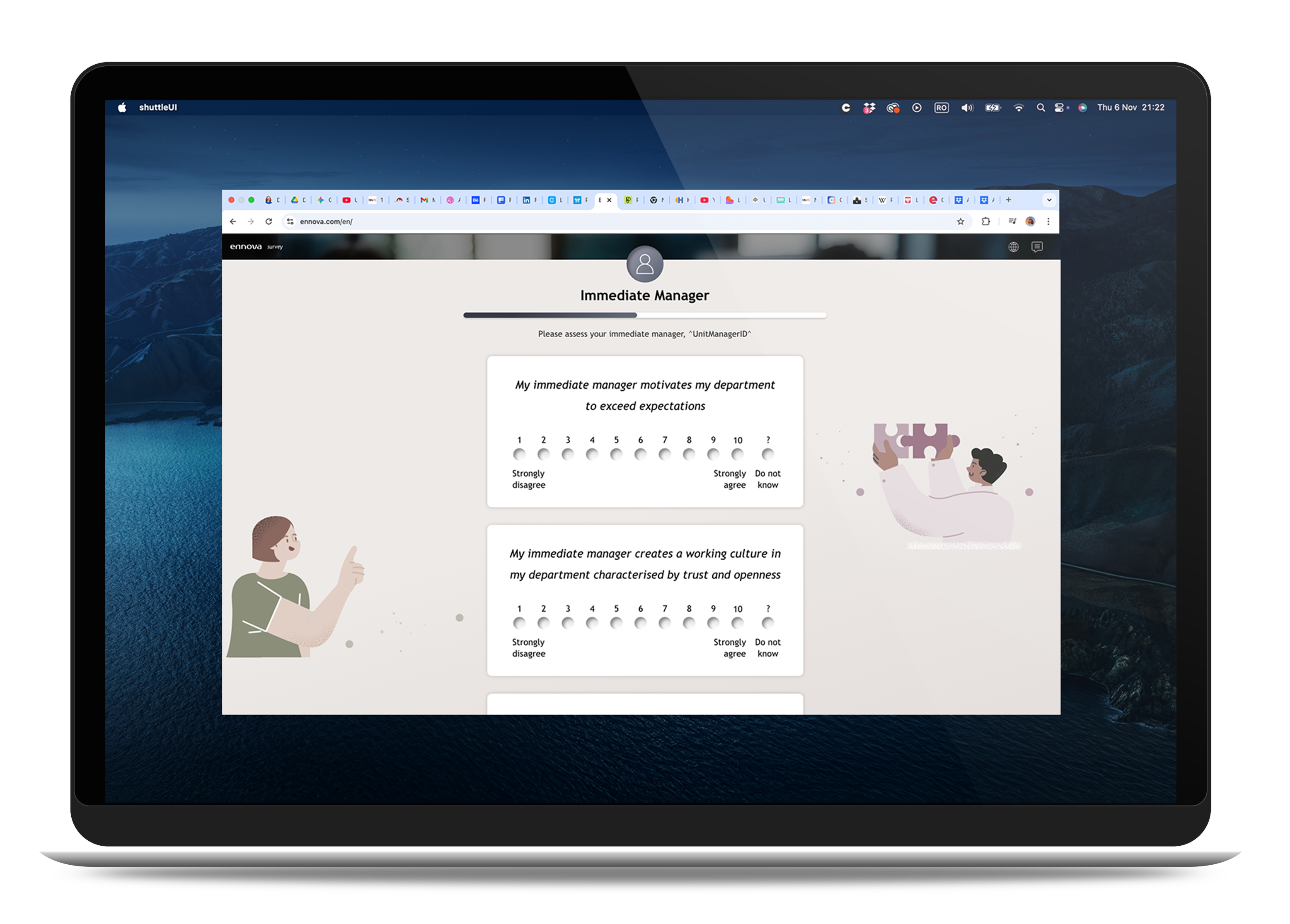
UI/UX Design for People Impact Platform
Transforming employee engagement through intuitive, ethical UI/UX design—with a focus on accessibility and sustainability.
the Product
Project Overview
For 1.5 years at Ennova, I worked as a UI/UX Designer on the People Impact Platform—a data-driven tool that helps organizations enhance employee engagement through real-time feedback, analytics, and actionable insights. My role focused on designing intuitive interfaces, scalable user flows, and inclusive experiences for HR professionals, managers, and employees, ensuring the platform empowered organizations to act on engagement data.
About Contour Design
Ennova is a platform vendor that merges data intelligence with human behavior insights to improve workplace culture. Their People Impact Platform enables organizations to gather real-time feedback, analyze trends, and take data-driven actions to foster collaboration, innovation, and employee well-being.
My role
UI/UX Designer (1.5 years)
- Designed core modules (HR, LeadUp, Team Talk, Team Dialogue Meetings, Whistleblowing).
- Created user flows, wireframes, and high-fidelity mockups for 6+ stakeholder roles (HR, managers, employees, C-level, admins).
- Advocated for accessibility (WCAG standards) and digital sustainability, presenting research to leadership.
- Collaborated in an agile environment with cross-functional teams (developers, product managers).
- Contributed to the platform’s design system (colors, UI components, responsive layouts).
Key Challenges
- Scaling User Roles: The platform evolved from 3 initial roles to 6+ stakeholder types, each requiring tailored experiences.
- Sensitive Data Flows: Designing whistleblowing questionnaires and Team Dialogue Meetings demanded privacy, clarity, and user trust.
- Agile Iterations: Delivering an MVP in 1 year while maintaining usability and scalability.
- Ethical Design Advocacy: Integrating accessibility and sustainability into an enterprise product.
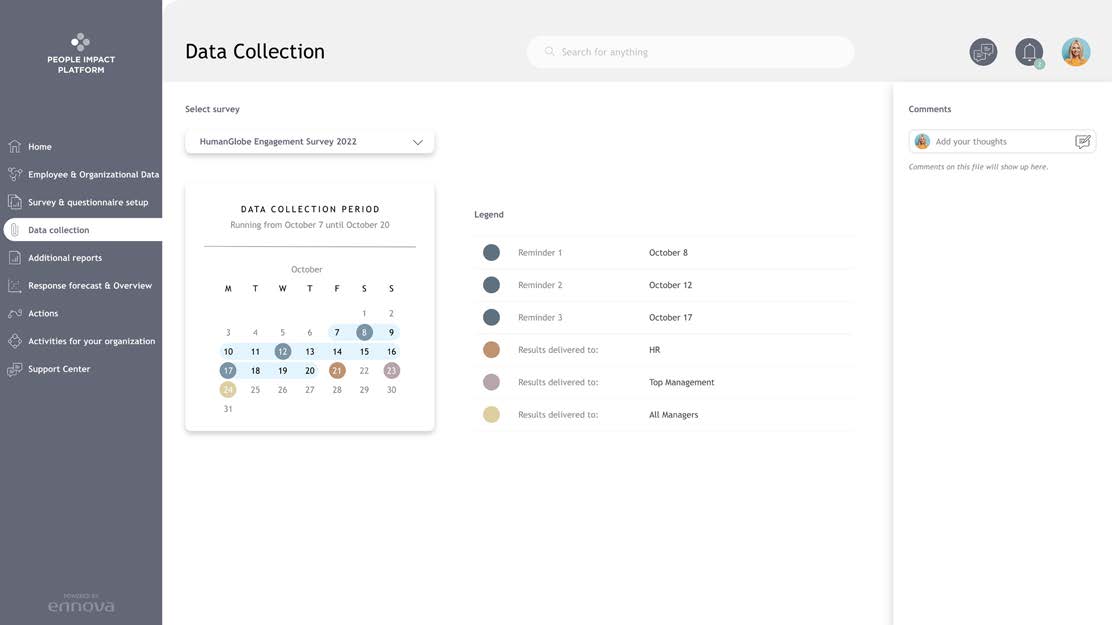
HR Module & Data Visualization
The goal was to transform complex employee data into intuitive, actionable dashboards for HR.
Contributions
- Redesigned feedback tracking and data visualization interfaces.
- Simplified user flows for managing employee records and generating reports.
Outcome
- HR teams could access and act on data without additional training.
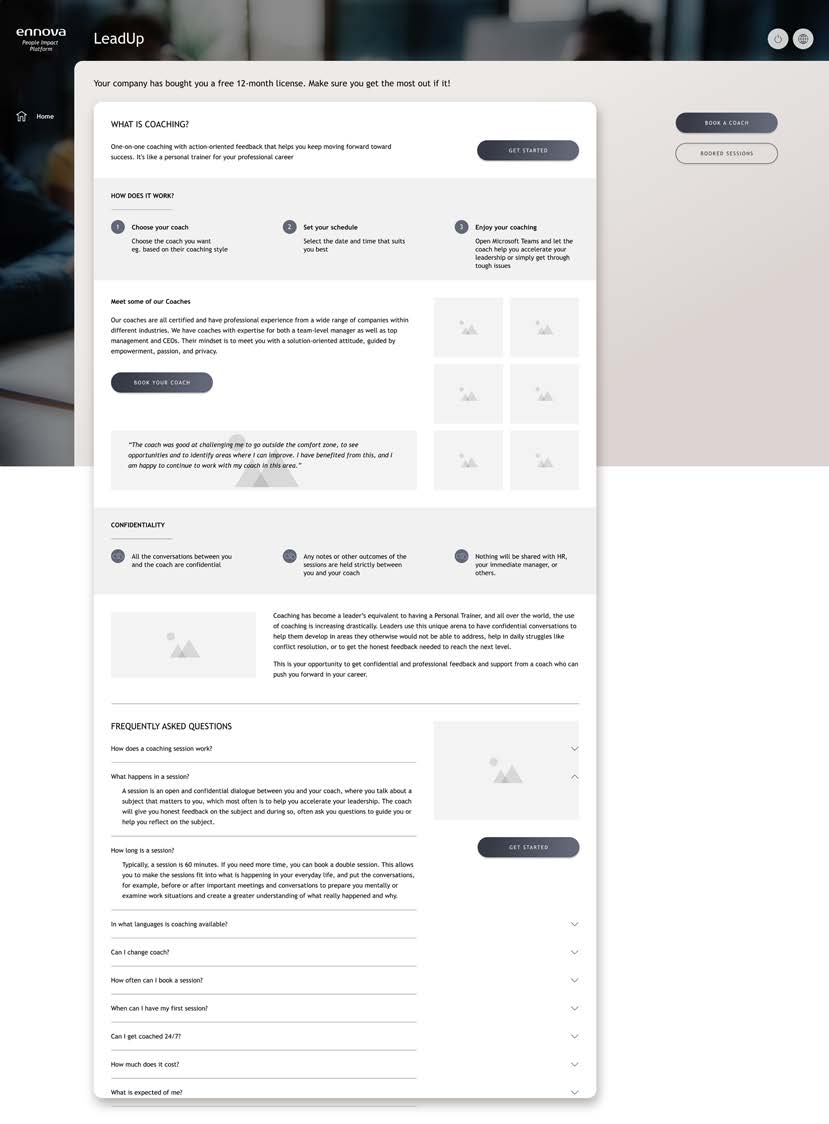
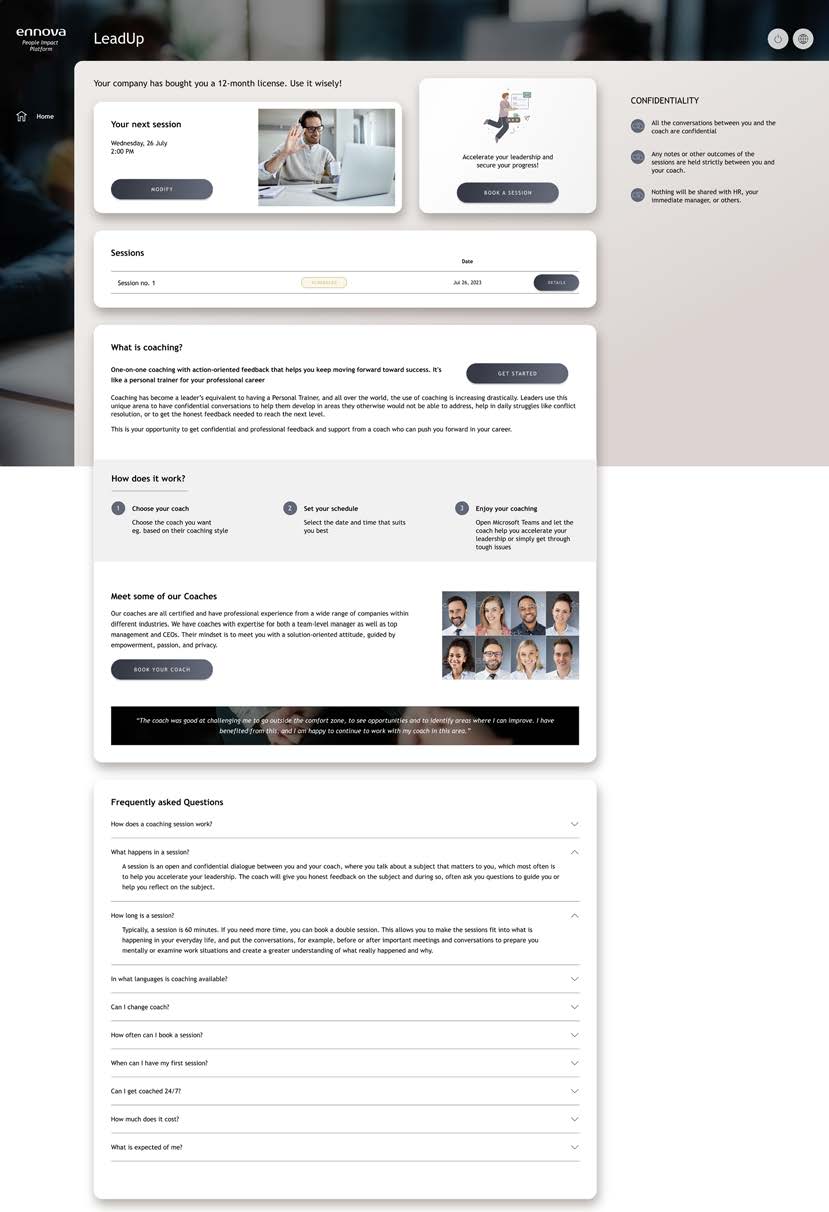
LeadUp – Leadership Coaching Tool
A data-driven coaching tool for leaders, based on engagement survey insights.
Contributions
- Designed user flows for personalized leadership development.
- Iterated to ensure clarity and actionability for managers.
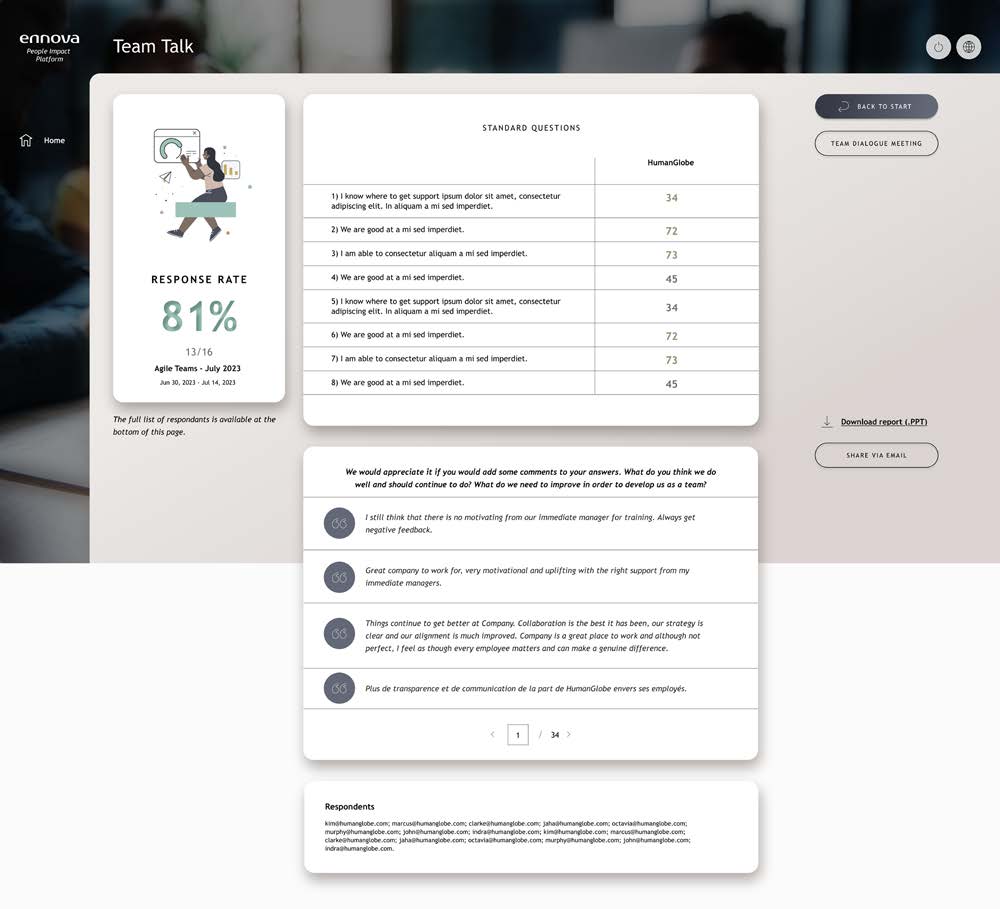
Team Talk – Agile Feedback Tool
A tool for rapid team feedback to address challenges and evaluate projects.
Contributions
- Designed UX proposals for agile surveys and result visualization.
- Created flows for team discussions based on feedback.
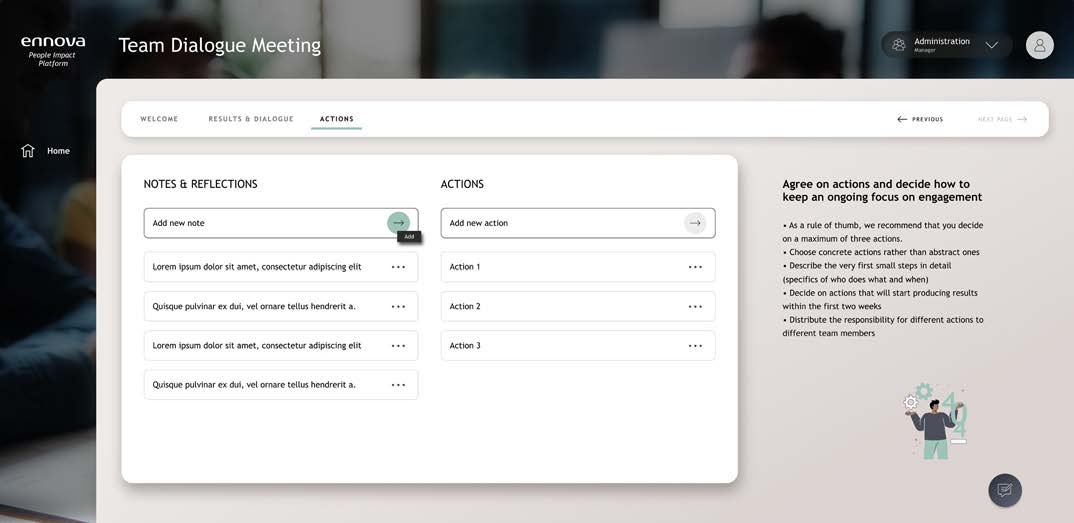
Team Dialogue Meetings
- A digital space for managers to discuss survey results with teams.
Contributions
- Designed a guided user flow for interpreting data and planning actions.
- Focused on reflective questions (e.g., "What initiatives do these results suggest?").
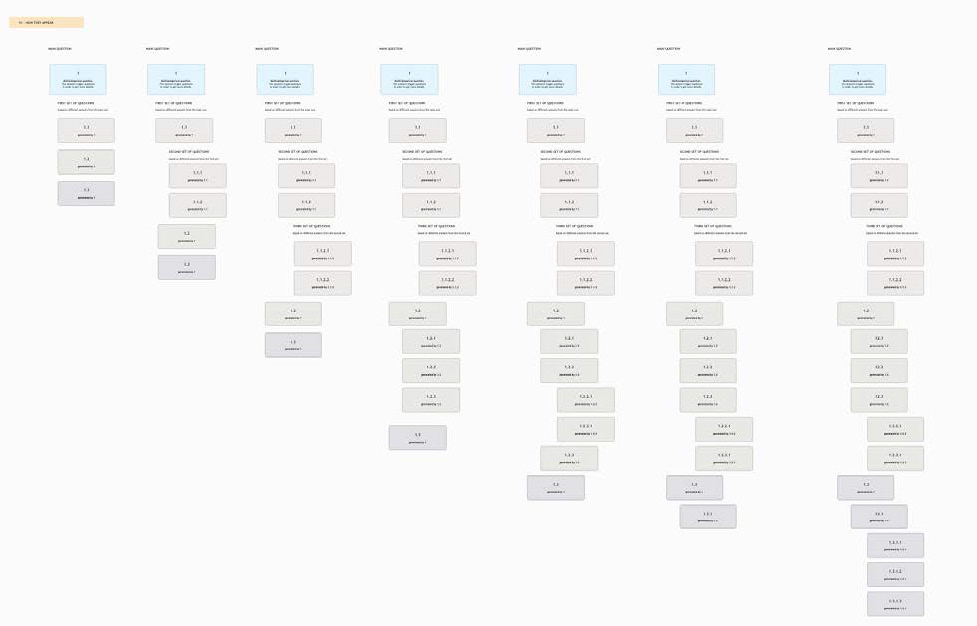
Whistleblowing Questionnaire
- A secure, multi-step questionnaire for sensitive disclosures.
Contributions
- Designed dynamic question flows to ensure anonymity and trust.
- Tested 3 formats (single-page, step-by-step, mixed) for optimal user comfort.
Outcome:
- A respectful, empowering experience for users to speak up safely.
Accessibility & Sustainability
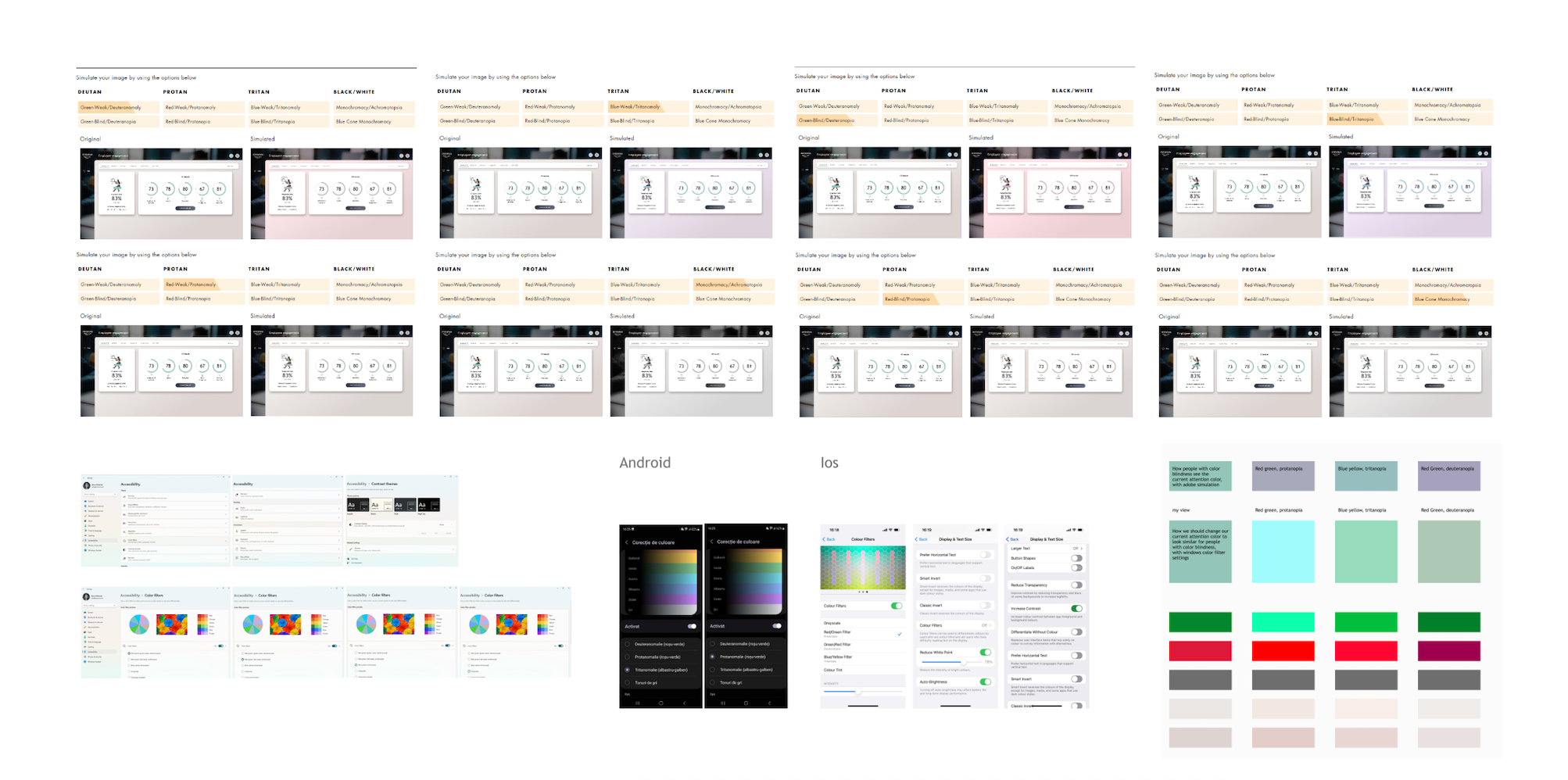
Align the platform with WCAG standards and reduce its digital carbon footprint.
Contributions:
- Researched and presented accessibility improvements (collaboration with Inklusio).
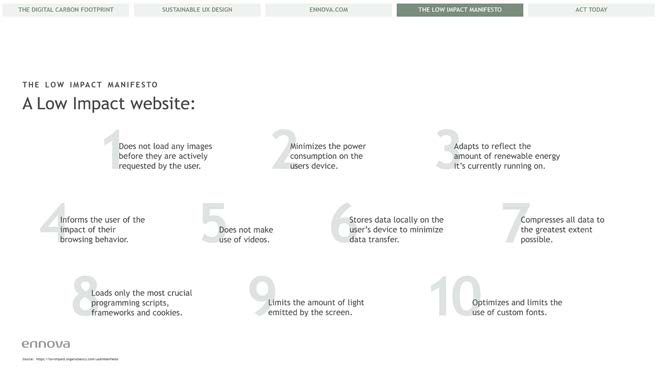
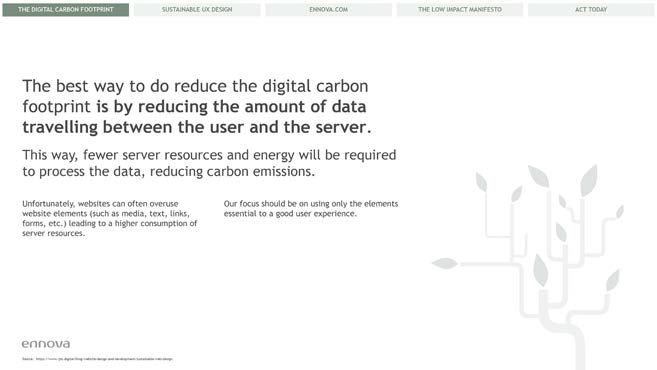
- Advocated for sustainable design practices (e.g., optimized media, energy-efficient cloud solutions).
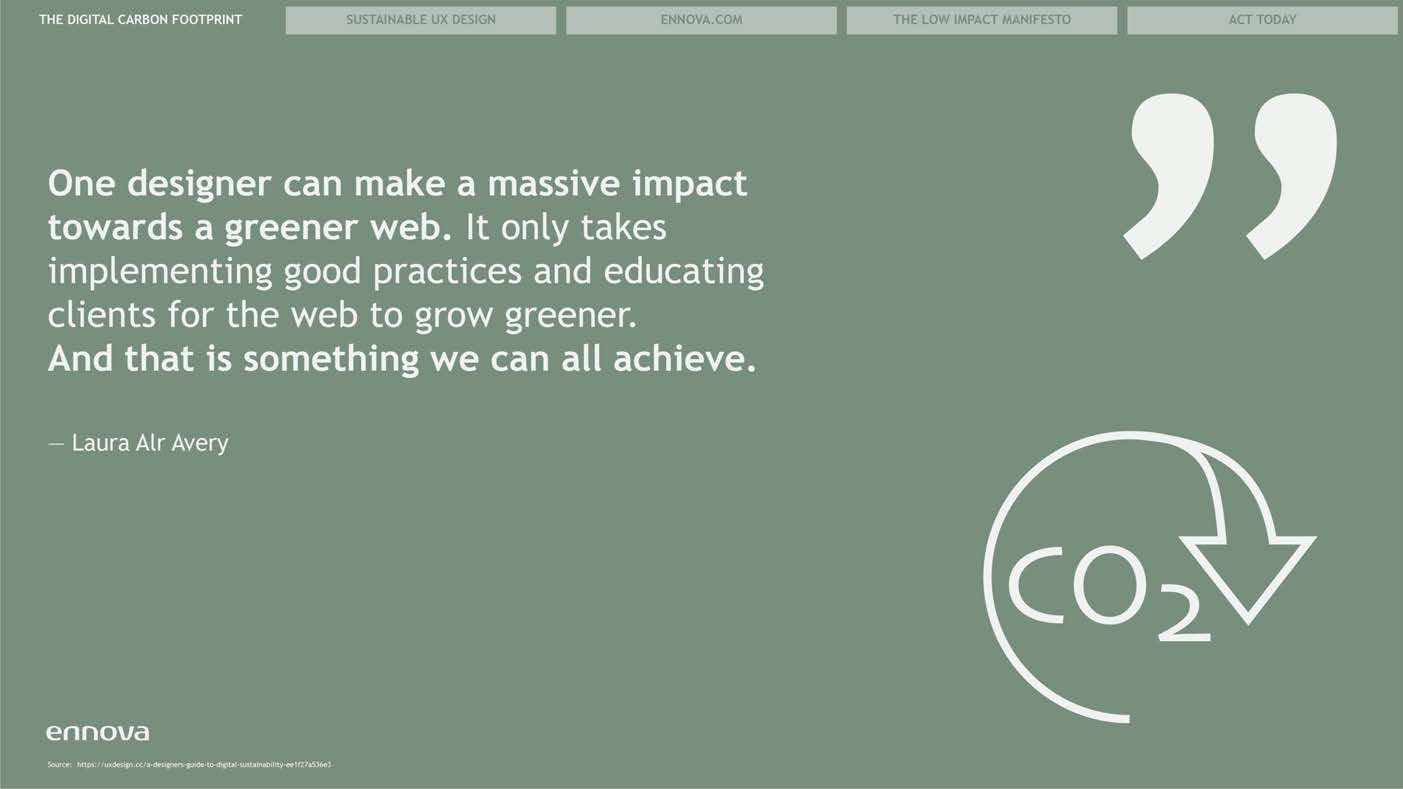
- Presented findings to leadership and department teams, sparking organizational change.
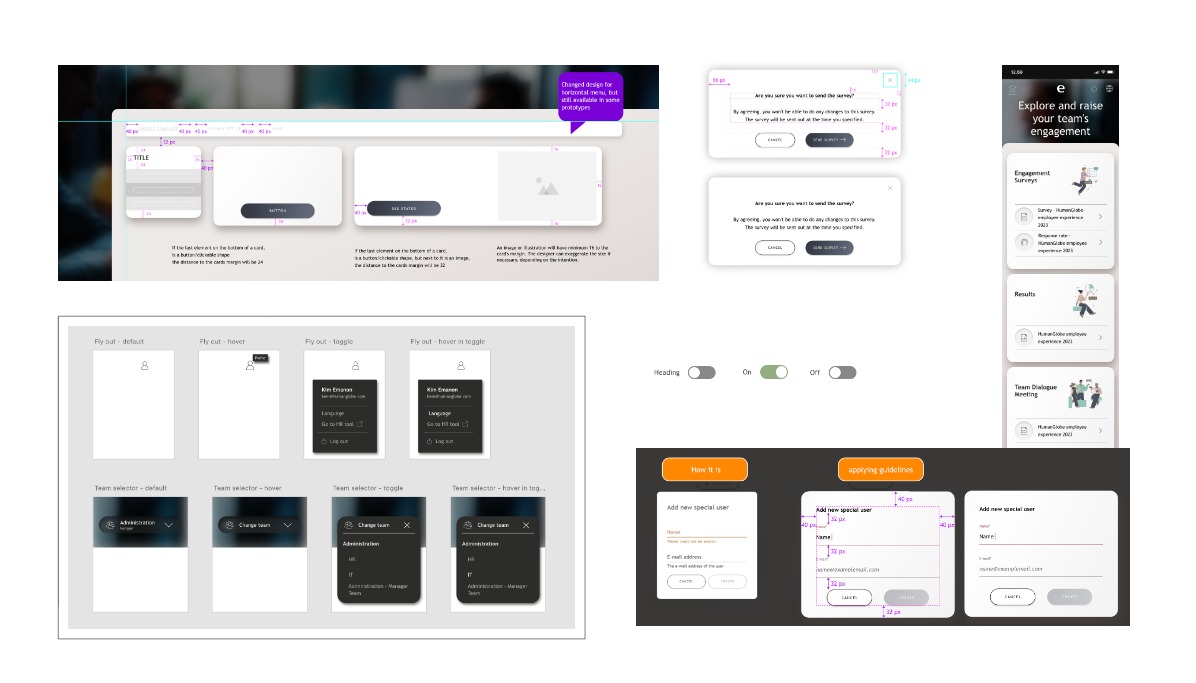
UI Enhancements & Design System
Modernize the platform’s visual design and usability.
Contributions
- New color palette and UI components (toggle switches, progress bars).
- Responsive layouts for wide screens.
- Multi-login system for users with dual roles.
Outcomes & Impact
- Scalable Design System: Supported 6+ user roles with clear, intuitive flows.
- Trusted Sensitive Flows: Whistleblowing and Team Dialogue features built on privacy and user empowerment.
- Organizational Change: Sustainability research adopted by leadership for future practices.
- User-Centric Ethos: Every design decision prioritized clarity, accessibility, and ethical impact.
Key takeaways
- Design for Empathy: Sensitive features (e.g., whistleblowing) taught me the importance of trust and psychological safety in UX.
- Scalability Matters: Designing for multiple stakeholder roles reinforced the need for flexible, modular systems.
- Advocate for Values: Researching accessibility and sustainability showed how design can drive organizational ethics.
- Agile Collaboration: Working in sprints with cross-functional teams highlighted the value of iteration and alignment.
- Impact Over Aesthetics: The most meaningful designs solve real problems—not just visual ones.
At Ennova, I learned that great design isn’t just about creating beautiful interfaces - it’s about empowering people. Whether through data visualization, sensitive feedback tools, or ethical advocacy, my work aimed to make the workplace more human, inclusive, and actionable.
UI/UX Design for People Impact Platform
Transforming employee engagement through intuitive, ethical UI/UX design—with a focus on accessibility and sustainability.
the Product
Project Overview
For 1.5 years at Ennova, I worked as a UI/UX Designer on the People Impact Platform—a data-driven tool that helps organizations enhance employee engagement through real-time feedback, analytics, and actionable insights. My role focused on designing intuitive interfaces, scalable user flows, and inclusive experiences for HR professionals, managers, and employees, ensuring the platform empowered organizations to act on engagement data.
About Contour Design
Ennova is a platform vendor that merges data intelligence with human behavior insights to improve workplace culture. Their People Impact Platform enables organizations to gather real-time feedback, analyze trends, and take data-driven actions to foster collaboration, innovation, and employee well-being.
My role
UI/UX Designer (1.5 years)
- Designed core modules (HR, LeadUp, Team Talk, Team Dialogue Meetings, Whistleblowing).
- Created user flows, wireframes, and high-fidelity mockups for 6+ stakeholder roles (HR, managers, employees, C-level, admins).
- Advocated for accessibility (WCAG standards) and digital sustainability, presenting research to leadership.
- Collaborated in an agile environment with cross-functional teams (developers, product managers).
- Contributed to the platform’s design system (colors, UI components, responsive layouts).
Key Challenges
- Scaling User Roles: The platform evolved from 3 initial roles to 6+ stakeholder types, each requiring tailored experiences.
- Sensitive Data Flows: Designing whistleblowing questionnaires and Team Dialogue Meetings demanded privacy, clarity, and user trust.
- Agile Iterations: Delivering an MVP in 1 year while maintaining usability and scalability.
- Ethical Design Advocacy: Integrating accessibility and sustainability into an enterprise product.
HR Module & Data Visualization
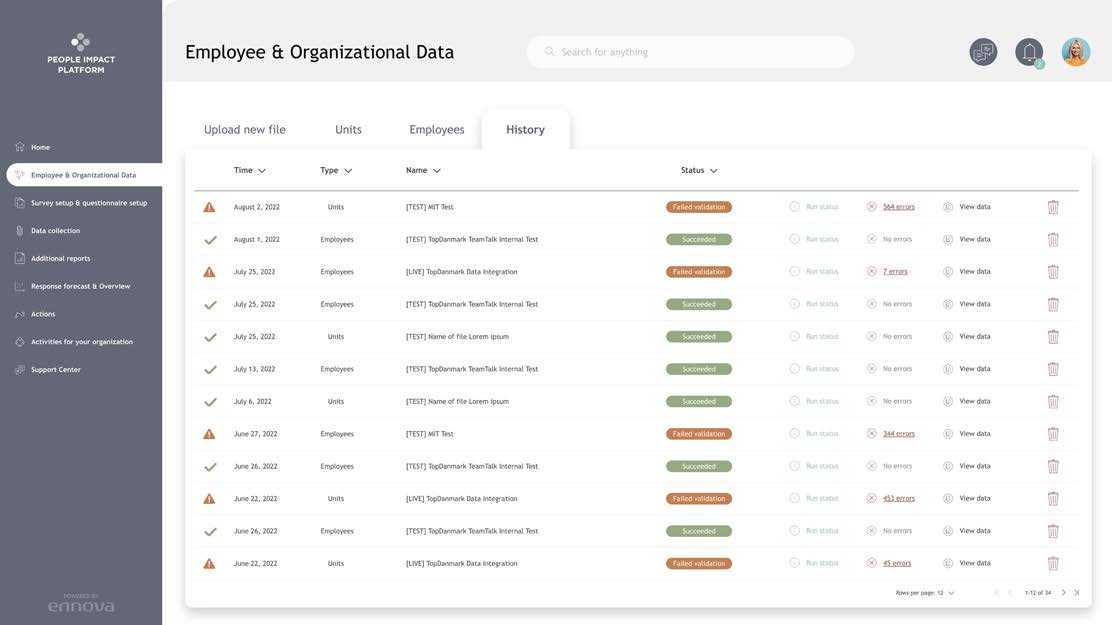
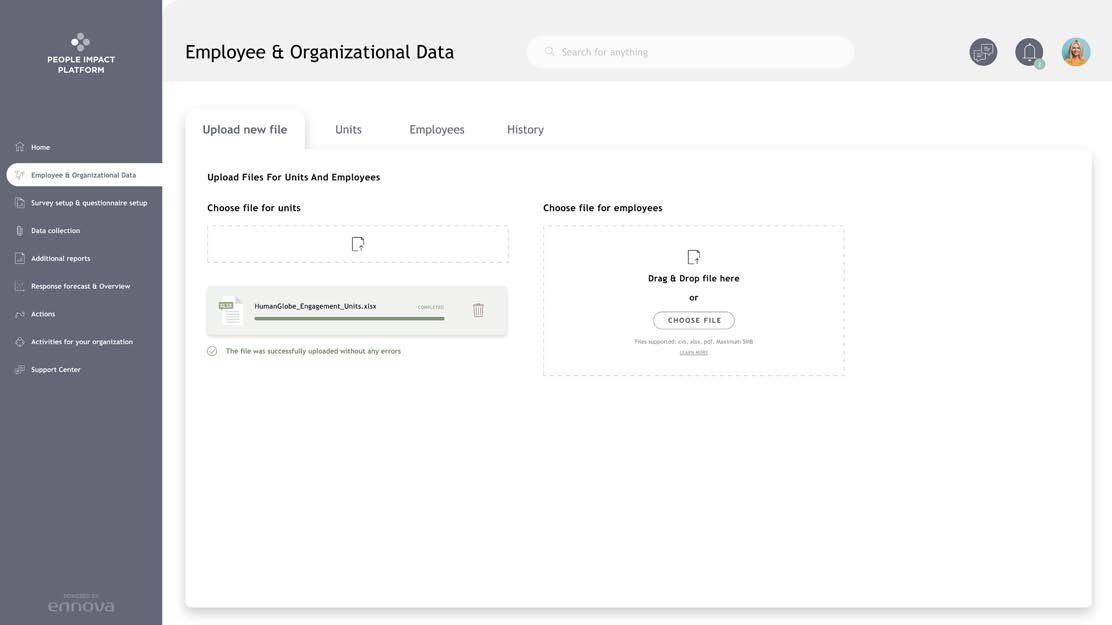
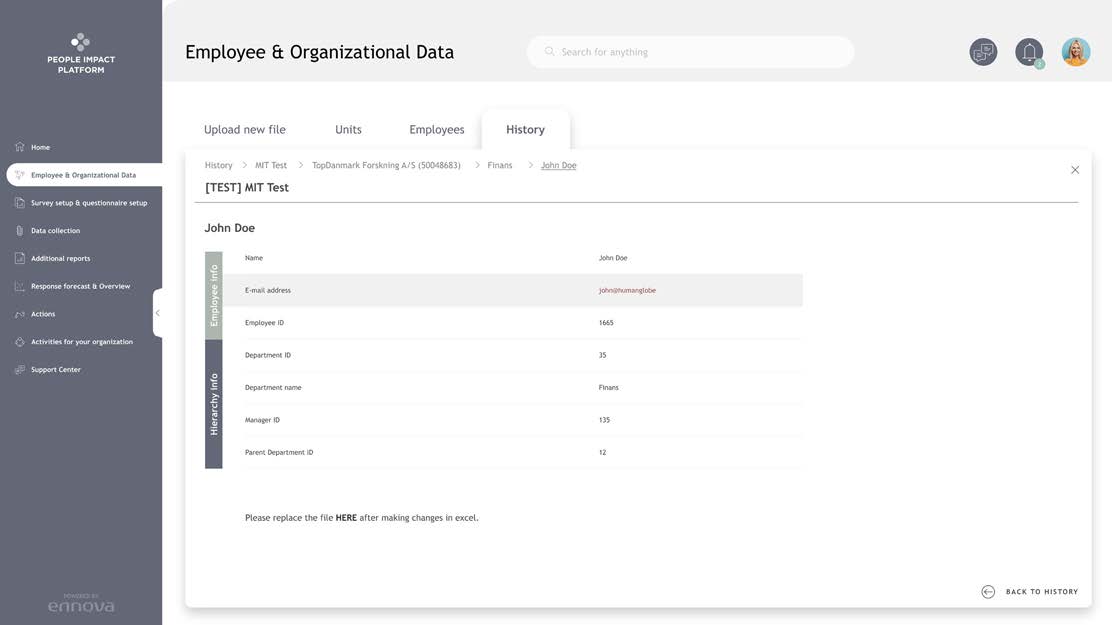
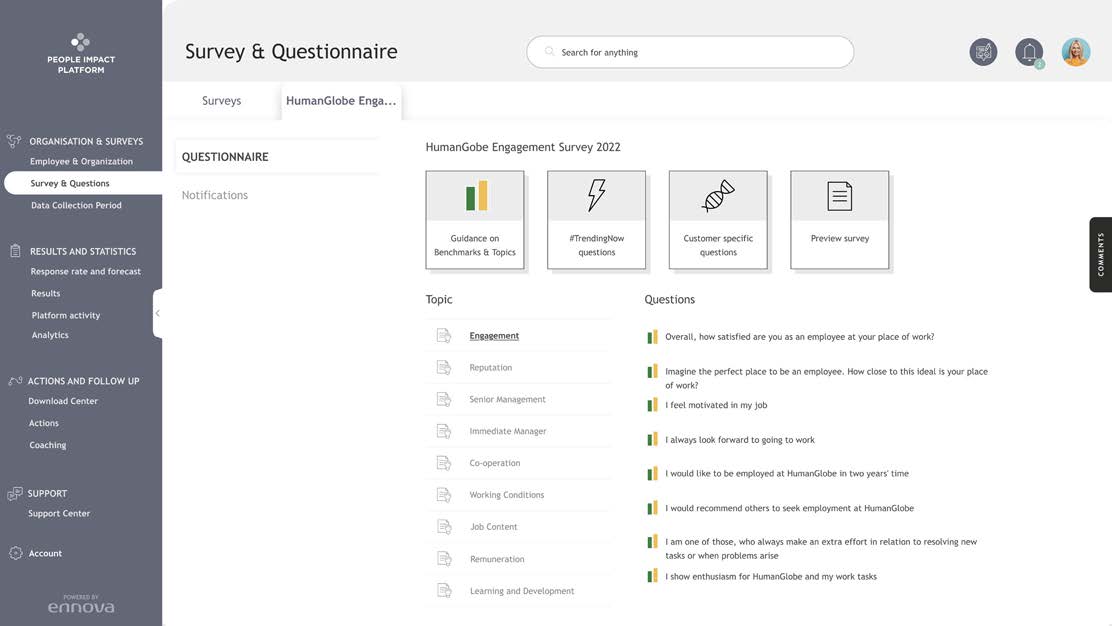
The goal was to transform complex employee data into intuitive, actionable dashboards for HR.
Contributions
- Redesigned feedback tracking and data visualization interfaces.
- Simplified user flows for managing employee records and generating reports.
Outcome
- HR teams could access and act on data without additional training.
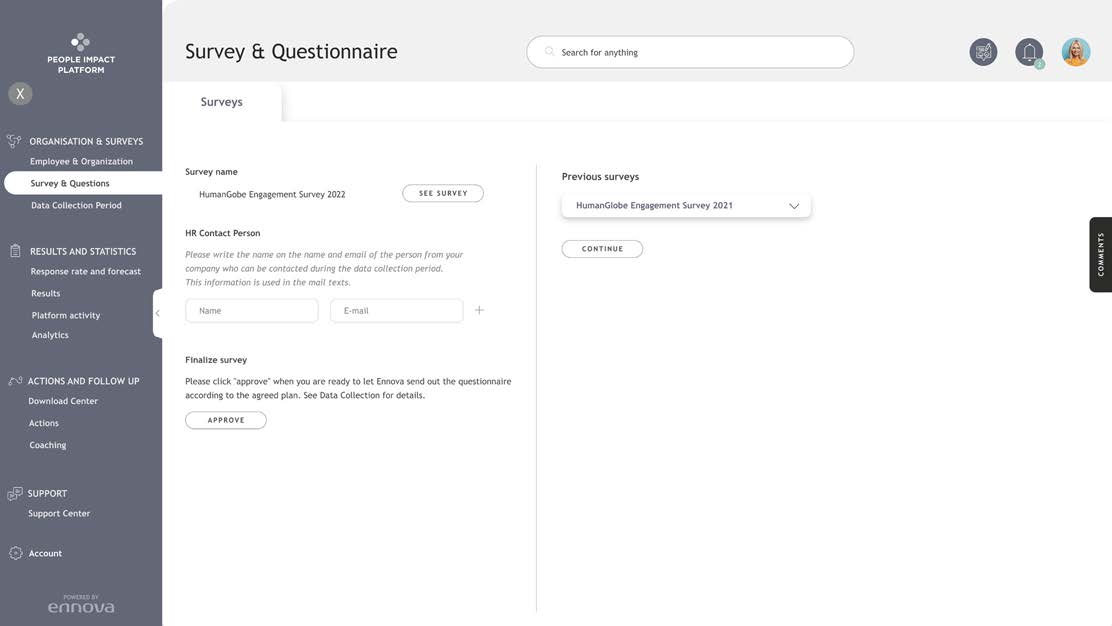
LeadUp – Leadership Coaching Tool
A data-driven coaching tool for leaders, based on engagement survey insights.
Contributions
- Designed user flows for personalized leadership development.
- Iterated to ensure clarity and actionability for managers.

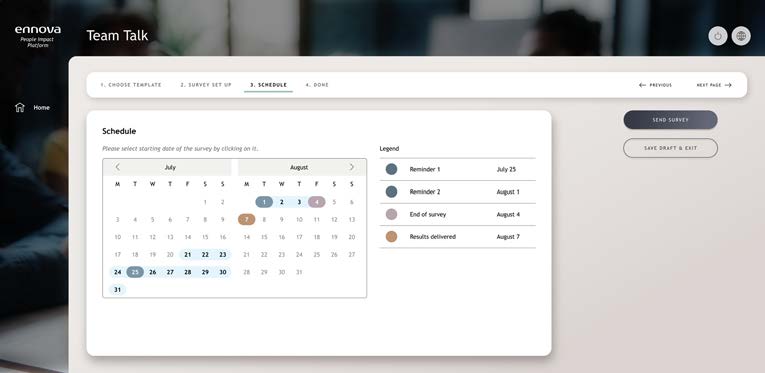
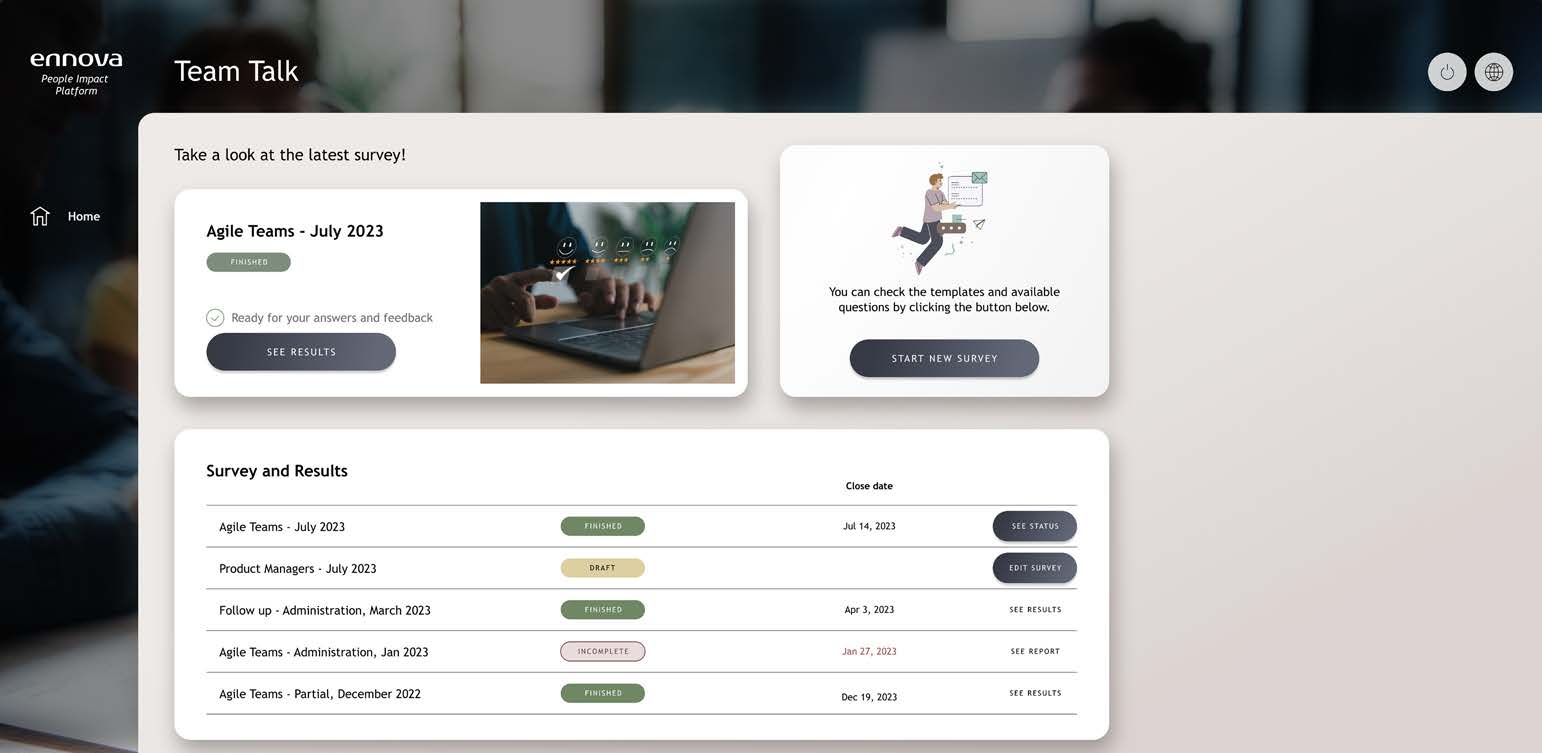
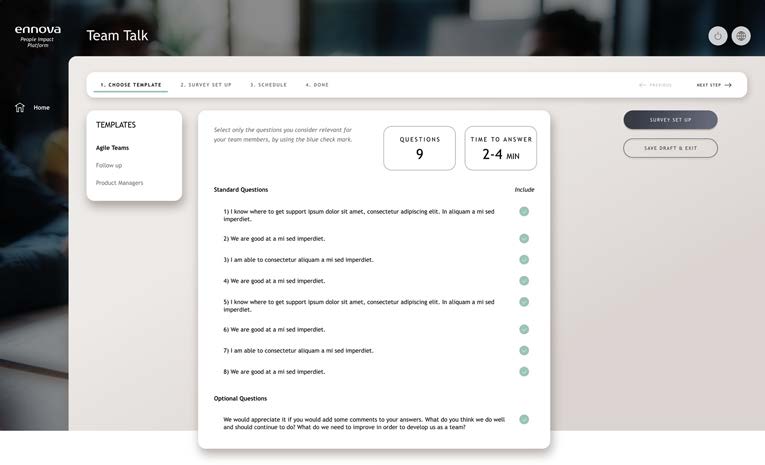
Team Talk – Agile Feedback Tool
A tool for rapid team feedback to address challenges and evaluate projects.
Contributions
- Designed UX proposals for agile surveys and result visualization.
- Created flows for team discussions based on feedback.
Team Dialogue Meetings
A digital space for managers to discuss survey results with teams.
Contributions
- Designed a guided user flow for interpreting data and planning actions.
- Focused on reflective questions (e.g., "What initiatives do these results suggest?").
Whistleblowing Questionnaire
A secure, multi-step questionnaire for sensitive disclosures.
Contributions
- Designed dynamic question flows to ensure anonymity and trust.
- Tested 3 formats (single-page, step-by-step, mixed) for optimal user comfort.
Outcome:
- A respectful, empowering experience for users to speak up safely.
Accessibility & Sustainability
Align the platform with WCAG standards and reduce its digital carbon footprint.
Contributions:
- Researched and presented accessibility improvements (collaboration with Inklusio).
- Advocated for sustainable design practices (e.g., optimized media, energy-efficient cloud solutions).
- Presented findings to leadership and department teams, sparking organizational change.
UI Enhancements & Design System
Modernize the platform’s visual design and usability.
Contributions
- New color palette and UI components (toggle switches, progress bars).
- Responsive layouts for wide screens.
- Multi-login system for users with dual roles.
Outcomes & Impact
- Scalable Design System: Supported 6+ user roles with clear, intuitive flows.
- Trusted Sensitive Flows: Whistleblowing and Team Dialogue features built on privacy and user empowerment.
- Organizational Change: Sustainability research adopted by leadership for future practices.
- User-Centric Ethos: Every design decision prioritized clarity, accessibility, and ethical impact.
Key takeaways
- Design for Empathy: Sensitive features (e.g., whistleblowing) taught me the importance of trust and psychological safety in UX.
- Scalability Matters: Designing for multiple stakeholder roles reinforced the need for flexible, modular systems.
- Advocate for Values: Researching accessibility and sustainability showed how design can drive organizational ethics.
- Agile Collaboration: Working in sprints with cross-functional teams highlighted the value of iteration and alignment.
- Impact Over Aesthetics: The most meaningful designs solve real problems—not just visual ones.
At Ennova, I learned that great design isn’t just about creating beautiful interfaces - it’s about empowering people. Whether through data visualization, sensitive feedback tools, or ethical advocacy, my work aimed to make the workplace more human, inclusive, and actionable.