
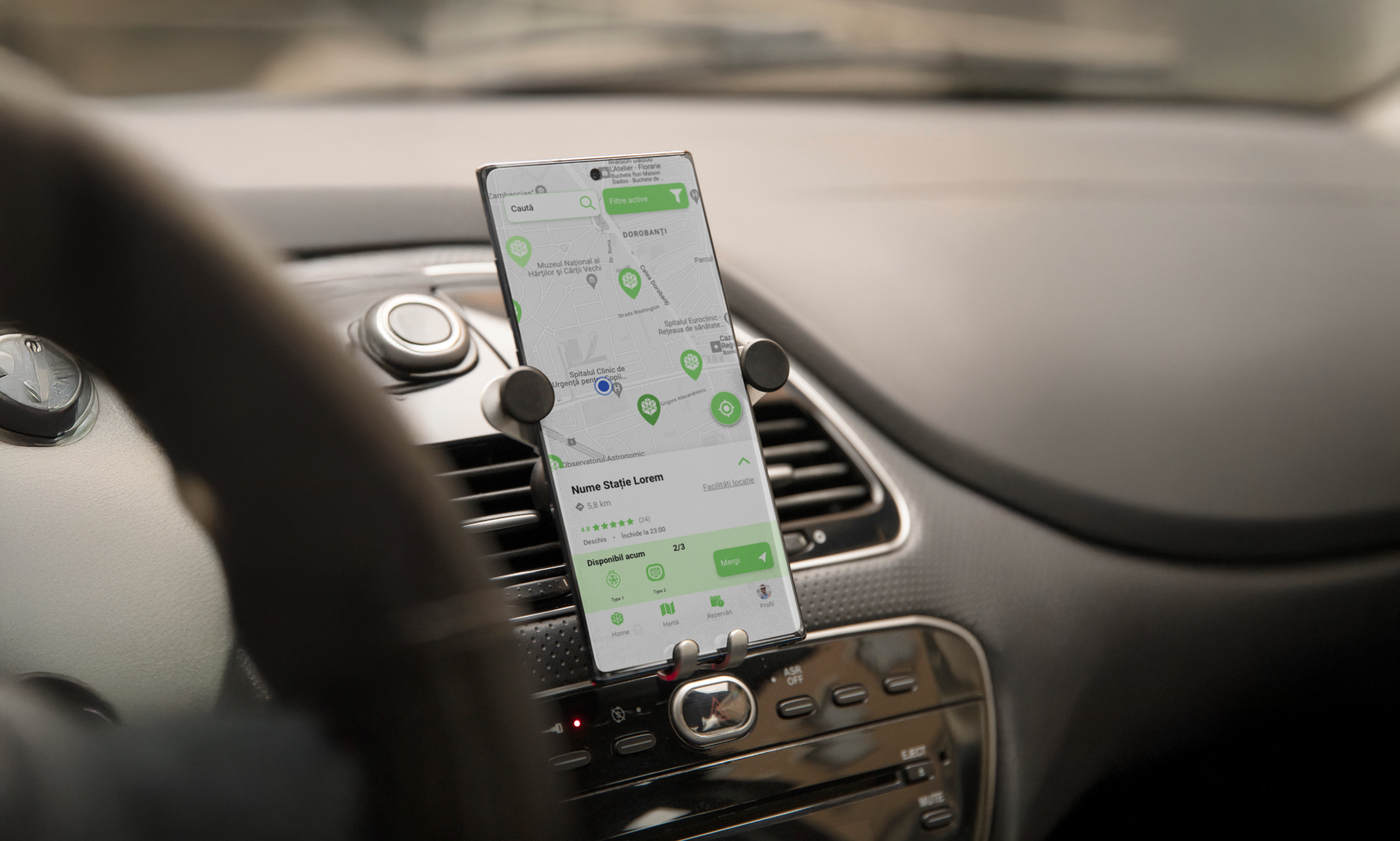
Redesigning the EV Charging Experience
a concept for SIMTEL
client's websiite
Project Overview
A conceptual mobile app design for SIMTEL, aimed at revolutionizing the electric vehicle (EV) charging experience in Romania. The goal was to create a user-centered solution that makes charging predictable, efficient, and stress-free—empowering drivers with real-time data, smart planning tools, and seamless interactions with charging stations. While this project remains a design concept (not yet implemented), it showcases how thoughtful UI/UX can address critical pain points in sustainable mobility.
About Simtel
SIMTEL is a Romanian leader in renewable energy, industrial automation, and telecommunications, driving innovation for a greener future. Their focus on smart electric mobility aligns with Romania’s growing EV infrastructure, making this project a strategic step toward sustainable transportation.
Objective
To design a mobile app prototype that transforms EV charging from a source of frustration into a seamless, confident experience. The app was envisioned to provide:
- Real-time charging station availability (no more guesswork).
- Intuitive planning tools (reservations, scheduling, smart filters).
- Personalized insights (cost savings, carbon impact, session summaries). All within a visually engaging, accessible interface that aligns with SIMTEL’s mission.
This project is a conceptual design study developed to address real user pain points in EV charging. While the app has not yet been implemented, the research, wireframes, and prototypes reflect a user-centered approach to solving critical challenges in electric mobility. All designs are based on user research, UX best practices, and SIMTEL’s strategic goals.
THE PROCESS
User research
Identified key pain points for EV drivers:
- Uncertainty about station availability.
- Delays due to unreserved slots.
- Lack of real-time updates during charging.
Hands-On Testing
Created low-fidelity prototypes focusing on:
- Intuitive navigation (map integration, filters).
- Reservation and scheduling flows.
- Real-time updates and session summaries.
UI Design
Developed a clean, modern interface with:
- Interactive maps for station location.
- Smart filters (power type, distance, pricing).
- Visual feedback for charging progress and costs.
Standout features
- Real-Time Availability: Instant visibility of free charging points.
- 15-Minute Reservations: Secure a slot to avoid waiting.
- Scheduled Charging: Plan sessions in advance for trips.
- Smart Filters: Find stations by power type, distance, or price.
- Personalized Insights: Track savings, carbon reduction, and session history.
- Seamless Experience: Live updates during charging + post-session summaries.
Key takeaways
- Design for Confidence: EV drivers need predictability—small features (like reservations) build trust.
- Sustainability as a Motivator: Highlighting carbon savings connects users to the bigger impact of their actions.
- Prototyping as a tool: Even unbuilt concepts can validate ideas and inspire future development.
- User Empowerment: Features like session ratings turn users into active participants in the EV ecosystem.
While this app remains a conceptual design, it demonstrates how user-centered UI/UX can transform a routine task into a seamless, empowering experience. By addressing real pain points—like uncertainty and inefficiency—this project shows the potential of design to drive real-world change in sustainable mobility. As EV infrastructure grows, solutions like this will be key to making electric mobility accessible and stress-free for everyone.
Redesigning the EV Charging Experience
a concept for SIMTEL
client's websiite
Project Overview
A conceptual mobile app design for SIMTEL, aimed at revolutionizing the electric vehicle (EV) charging experience in Romania. The goal was to create a user-centered solution that makes charging predictable, efficient, and stress-free—empowering drivers with real-time data, smart planning tools, and seamless interactions with charging stations. While this project remains a design concept (not yet implemented), it showcases how thoughtful UI/UX can address critical pain points in sustainable mobility.
About Simtel
SIMTEL is a Romanian leader in renewable energy, industrial automation, and telecommunications, driving innovation for a greener future. Their focus on smart electric mobility aligns with Romania’s growing EV infrastructure, making this project a strategic step toward sustainable transportation.
Objective
To design a mobile app prototype that transforms EV charging from a source of frustration into a seamless, confident experience. The app was envisioned to provide:
- Real-time charging station availability (no more guesswork).
- Intuitive planning tools (reservations, scheduling, smart filters).
- Personalized insights (cost savings, carbon impact, session summaries). All within a visually engaging, accessible interface that aligns with SIMTEL’s mission.
This project is a conceptual design study developed to address real user pain points in EV charging. While the app has not yet been implemented, the research, wireframes, and prototypes reflect a user-centered approach to solving critical challenges in electric mobility. All designs are based on user research, UX best practices, and SIMTEL’s strategic goals.
THE PROCESS
User research
Identified key pain points for EV drivers:
- Uncertainty about station availability.
- Delays due to unreserved slots.
- Lack of real-time updates during charging.
Hands-On Testing
Created low-fidelity prototypes focusing on:
- Intuitive navigation (map integration, filters).
- Reservation and scheduling flows.
- Real-time updates and session summaries.
UI Design
Developed a clean, modern interface with:
- Interactive maps for station location.
- Smart filters (power type, distance, pricing).
- Visual feedback for charging progress and costs.
Standout features
- Real-Time Availability: Instant visibility of free charging points.
- 15-Minute Reservations: Secure a slot to avoid waiting.
- Scheduled Charging: Plan sessions in advance for trips.
- Smart Filters: Find stations by power type, distance, or price.
- Personalized Insights: Track savings, carbon reduction, and session history.
- Seamless Experience: Live updates during charging + post-session summaries.
Key takeaways
- Design for Confidence: EV drivers need predictability—small features (like reservations) build trust.
- Sustainability as a Motivator: Highlighting carbon savings connects users to the bigger impact of their actions.
- Prototyping as a tool: Even unbuilt concepts can validate ideas and inspire future development.
- User Empowerment: Features like session ratings turn users into active participants in the EV ecosystem.
While this app remains a conceptual design, it demonstrates how user-centered UI/UX can transform a routine task into a seamless, empowering experience. By addressing real pain points—like uncertainty and inefficiency—this project shows the potential of design to drive real-world change in sustainable mobility. As EV infrastructure grows, solutions like this will be key to making electric mobility accessible and stress-free for everyone.